

In the modern food and consumer goods industry, packaging transcends its basic protective function. It has become a critical element that influences product safety, shelf life, brand perception, and consumer convenience. Lidding film represents a revolutionary advancement in flexible packaging technology, offering manufacturers an elegant solution that combines superior barrier protection, visual appeal, and operational efficiency.
What is Lidding Film? Understanding the Technology
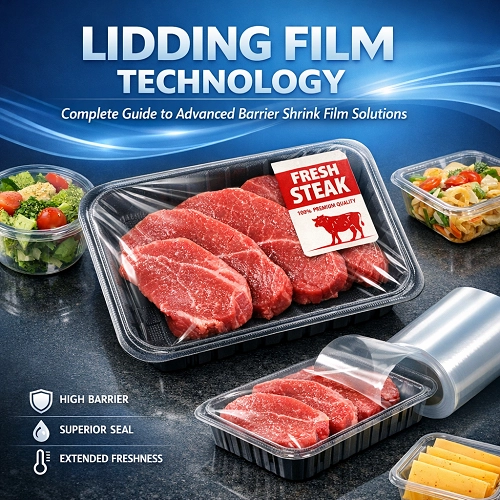
Lidding film is a flexible, heat-sealable material engineered specifically to seal trays and containers in automated or semi-automated packaging environments. Unlike traditional shrink wrap, which envelops entire products, lidding film applies as a top layer that creates a hermetic seal directly to the container's rim. This innovative approach delivers multiple simultaneous benefits: tamper-evident packaging, contamination prevention, and extended product shelf life.
The technology combines multiple polymer layers, barrier coatings, and functional additives in a precisely engineered structure. The result is a product that performs across diverse applications—from fresh food packaging to sterile medical device sealing to protective industrial applications. The film's heat-activation mechanism ensures reliable sealing across various substrate materials, including polyethylene (PE), polypropylene (PP), polystyrene (PS), polyethylene terephthalate (PET), and aluminum containers.
Key Technical Properties of Advanced Lidding Film
Modern lidding film exhibits a sophisticated array of engineered properties that distinguish it from conventional flexible packaging. Understanding these properties is essential for selecting the optimal solution for specific applications.
High Oxygen Barrier
Advanced multilayer construction with specialized barrier polymers reduces oxygen transmission rates to exceptional levels, typically 15 cm³/(m²·24h·0.1MPa) or lower, preventing oxidative degradation of sensitive products.
Exceptional Anti-Fog Properties
Proprietary anti-fog coating prevents condensation and moisture buildup on the film surface, maintaining crystal-clear visibility of packaged products—a critical factor in retail environments where visual appeal drives purchasing decisions.
Superior Transparency & Gloss
Optical clarity with haze levels as low as 4% combined with glossiness metrics exceeding 90 ensures products display brilliantly on retail shelves, enhancing brand perception and consumer confidence in product freshness.
Moisture Vapor Barrier
Water vapor transmission rates (WVTR) controlled to approximately 20 g/m²·24h prevent moisture migration, essential for maintaining product integrity, preventing microbial growth, and preserving texture and flavor characteristics.
Mechanical and Thermal Properties
Beyond protective properties, lidding film demonstrates impressive mechanical strength. Tensile strength values of 70 MPa in both machine direction (MD) and transverse direction (TD) ensure the film withstands mechanical stresses during application, storage, and consumer handling. The film maintains structural integrity with elongation properties around 80% in both directions, providing flexibility without brittleness.
Thermal characteristics are equally sophisticated. The film exhibits controlled shrinkage at 100°C, typically around 15% in both directions, allowing for optimized heat-sealing processes. This controlled shrinkage prevents warping or distortion while ensuring reliable seal formation. Additionally, many formulations offer microwave-safe ratings and oven-safe capabilities, accommodating modern consumer lifestyles that demand convenient, ready-to-heat food options.
Advanced Barrier Mechanisms: Technical Deep Dive
The exceptional barrier properties of modern lidding film result from sophisticated multilayer engineering. The film typically consists of 3-7 polymer layers, each serving a distinct functional purpose in the overall protection strategy.
Oxygen Barrier Layer
The critical oxygen barrier layer employs ethylene vinyl alcohol (EVOH) or polyvinylidene chloride (PVDC) polymers, which possess inherent low gas permeability. These materials create a tortuous diffusion pathway that oxygen molecules must navigate, dramatically reducing transmission rates. The oxygen transmission rate (OTR) of 15 cm³/(m²·24h·0.1MPa) represents exceptional performance—typically 90-95% more effective than standard films. This is critical for fresh meat packaging, where oxidation causes color changes and quality degradation within hours.
Moisture Management Architecture
Water vapor transmission is controlled through a combination of hydrophobic outer layers and moisture-absorbing interior components. The water vapor transmission rate (WVTR) of approximately 20 g/m²·24h represents a significant reduction compared to unmodified polyolefin films. This architecture prevents two critical failure modes: (1) moisture loss through evaporation, which causes product desiccation, and (2) moisture ingress, which can promote microbial growth and texture degradation.
Optical Clarity Enhancement
Maintaining transparency while incorporating barrier layers requires sophisticated additive chemistry. Anti-fog agents prevent condensation without creating a visible residue. The formulation achieves a haze level of just 4%, ensuring the film is virtually invisible to consumers while providing barrier functionality. Combined with glossiness measurements exceeding 90, the film creates a premium visual presentation that enhances shelf appeal and brand perception.
Core Barrier Technologies
- Multilayer Construction:3-7 engineered polymer layers optimized for specific barrier functions
- EVOH/PVDC Integration:Advanced barrier polymers with exceptional gas impermeability
- Nanocomposite Enhancement:Optional nanoclay additives for improved barrier at reduced thickness
- Adhesive Layer Technology:Specialized adhesives ensure multilayer cohesion under heat and mechanical stress
- Anti-Fog Chemistry:Proprietary antifog agents maintain clarity throughout product lifecycle
- UV Absorber Integration:Protected formulations shield sensitive products from photodegradation
Industry Applications & Use Cases
Lidding film's versatility across diverse industries stems from its combination of protective functionality, visual appeal, and processing compatibility. The technology addresses specific pain points in multiple sectors.
Food & Beverage Applications
Fresh Meat Packaging
High oxygen barrier and anti-fog properties maintain color and freshness of red meat. Typical shelf life extensions of 3-5 days compared to unprotected packaging.
Dairy Products
Moisture and oxygen barriers preserve flavor profiles while preventing mold growth. Ideal for yogurt, cheese, and dairy-based prepared meals.
Ready-to-Eat Foods
Provides dual protection: maintains product moisture while allowing controlled gas exchange. Perfect for salads, prepared meals, and deli items.
Healthcare & Medical Applications
In sterile environments, lidding film provides tamper-evident sealing that protects medical device integrity from sterilization through end-of-shelf-life. The film maintains visibility for quick inventory identification while ensuring contamination-free storage. Applications include surgical kits, diagnostic test trays, and sterile component packaging.
Personal Care & Cosmetics
Premium skincare and cosmetic products benefit from lidding film's barrier properties and aesthetic appeal. The crystal-clear film showcases product quality while protecting against oxidation, moisture loss, and contamination. Customizable printing allows for branding and regulatory compliance information.
Additional Industrial Applications
- Fresh Produce: Extends shelf life by controlling respiration and moisture loss
- Bakery Products: Maintains freshness and prevents staling while showcasing baked goods
- Seafood & Aquatic Products: Exceptional oxygen barrier prevents oxidative discoloration and off-flavors
- Pharmaceutical Packaging: Protects sensitive formulations from light, moisture, and atmospheric oxygen
- Industrial Components: Dust-proof, moisture-proof protection for hardware kits and electronic assemblies
- Specialty Retail Products: Enhanced packaging for premium product positioning
Technical Specifications & Performance Data
Precise understanding of lidding film specifications is essential for successful integration into production lines. The following data represents standard high-performance formulations.
Customization Capabilities
Modern lidding film manufacturers offer extensive customization options to match specific operational requirements:
- Width Specifications: Custom widths available from 300mm to 650mm, engineered to match existing thermoforming or sealing equipment
- Print Options: Advanced printing technologies enable custom graphics, regulatory compliance text, and branding elements
- Seal Properties: Adjustable heat-seal initiation temperatures and seal strength profiles for diverse substrate compatibility
- Additive Formulations: Specialized additives for microwave heating, thermal-shock resistance, or enhanced UV protection
- Color Variations: Custom color incorporation for brand identity or product differentiation
- Die-Cut Options: Pre-cut to specific shapes for enhanced automation and reduced waste
Figure 3: Comprehensive manufacturing process from material selection to final delivery
Competitive Advantages & Performance Benefits
When compared to alternative packaging solutions, lidding film delivers multiple simultaneous advantages that translate to measurable business benefits.
Superior Shelf Life Extension
Fresh meat products typically experience a 3-5 day shelf life extension with lidding film compared to conventional packaging. This extension results from the combination of oxygen barrier properties (OTR of 15 cm³/m²·24h) and moisture preservation (WVTR of 20 g/m²·24h). The extended shelf life reduces retailer waste, improves product availability, and enhances consumer satisfaction—translating directly to increased retailer profit margins and brand loyalty.
Enhanced Visual Appeal & Brand Perception
The combination of exceptional clarity (90/100 rating) and premium gloss (100 gloss units) creates a retail presentation that justifies premium pricing. Customers perceive products sealed with lidding film as fresher and higher-quality. The anti-fog properties ensure consistent visibility throughout the product's shelf life, preventing the "cloudy film" appearance that communicates product age.
Operational Efficiency & Cost Management
Lidding film integrates seamlessly into existing thermoforming and sealing equipment, eliminating expensive capital investments. The film's compatibility with diverse substrate materials (PE, PP, PS, PET, aluminum) provides flexibility in packaging material selection. Waste reduction from precise sealing and die-cut options improves operational efficiency and reduces material costs.
Tamper-Evident Security
The heat-sealed lidding film provides visible evidence of any tampering, offering consumers assurance of product integrity. This is particularly critical for food safety, medical devices, and pharmaceutical products where contamination concerns drive purchasing decisions.
Environmental Considerations & Sustainability
Modern lidding film manufacturers recognize environmental responsibility as integral to product development. Contemporary formulations address sustainability through multiple approaches:
Recyclable Film Options
Advanced formulations utilizing polyolefin-based structures (PE/PP) are increasingly compatible with existing plastic recycling infrastructure. These formulations maintain full barrier functionality while enabling post-consumer recycling, reducing landfill waste and supporting circular economy principles.
Compostable & Bio-Based Alternatives
Next-generation lidding films incorporate biopolymers such as polylactic acid (PLA) and polyhydroxyalkanoates (PHA). These materials offer comparable barrier and mechanical properties while providing industrial compostability. The shelf life extension provided by barrier properties reduces product waste during distribution and retail phases—often offsetting the production resource consumption of the packaging itself.
Thickness Optimization & Material Efficiency
The optimal thickness of 25 μm represents carefully balanced engineering. This specification provides necessary barrier functionality while minimizing material consumption. Compared to thicker traditional films, lidding film reduces material usage by 30-40% while delivering superior barrier properties—directly lowering environmental impact per protected product unit.
Sustainability Initiatives
- Extended Product Shelf Life: Reduces food waste in retail and consumer phases—often the dominant environmental impact
- Material Reduction: Optimized thickness achieves superior performance with less material consumption
- Recycling Compatibility: Formulations designed for integration with existing plastic recycling streams
- Compostable Options: Bio-based formulations provide industrial compostability for appropriate applications
- Waste Reduction: Precise sealing and die-cut options eliminate packaging waste in production
- Supplier Partnerships: Collaborative relationships with recyclers and waste management systems optimize end-of-life scenarios
Manufacturing, Integration & Customization
Successful lidding film implementation requires detailed understanding of manufacturing capabilities and equipment integration requirements. Modern lidding film solutions are engineered for seamless integration into existing production infrastructure.
Equipment Compatibility & Integration
Lidding film is compatible with standard thermoforming, form-fill-seal (FFS), and horizontal/vertical sealing equipment. The film requires heat-sealing temperatures typically between 120-160°C, depending on specific formulation and substrate material. Sealing pressure requirements are moderate—typically 0.5-2.0 MPa—making integration into existing equipment straightforward without capital investment.
Seal Parameter Optimization
Optimal sealing requires balanced engagement of three variables: temperature, holding time, and applied pressure. Technical teams work collaboratively with manufacturers to establish equipment-specific parameters that ensure reliable, consistent seal formation. Modern equipment features programmable controllers that optimize these parameters for maximum seal strength and consistency.
Customization & Specification Development
Professional packaging manufacturers offer extensive customization capabilities to match specific operational requirements:
- Width Specifications: Custom widths from 300-650mm engineered for equipment specifications
- Printing & Graphics: Advanced printing technologies enable full-color branding, ingredient information, and regulatory compliance text
- Seal Initiation Temperature: Formulation adjustments accommodate diverse substrate materials and equipment capabilities
- Additive Packages: Specialized formulations for microwave heating, thermal shock resistance, or UV protection
- Color Integration: Custom colors support brand identity and product differentiation strategies
- Die-Cutting Services: Pre-cut shapes reduce customer processing time and waste
Technical Support & Implementation
Leading lidding film manufacturers provide comprehensive technical support throughout implementation:
- Equipment Parameter Evaluation: Technical teams assess existing equipment specifications and develop optimized sealing parameters
- Trial Runs & Sampling: Complimentary trials using client containers and products ensure real-world performance validation
- Production Support: On-site technical assistance during initial implementation ensures smooth transition
- Quality Assurance: Batch-level testing confirms specifications and identifies issues before products reach production
- Ongoing Optimization: Collaborative feedback loops enable continuous improvement as operational experience accumulates
Conclusion: The Future of Protective Packaging Solutions
Lidding film represents a fundamental evolution in flexible packaging technology, delivering simultaneous benefits across product protection, operational efficiency, visual appeal, and environmental responsibility. The technology's combination of exceptional barrier properties (OTR of 15, WVTR of 20), optical excellence (clarity rating of 90, gloss of 100), and mechanical durability (70 MPa tensile strength) makes it uniquely suited for contemporary food, medical, and consumer product packaging challenges.
Current Industry Trends
The packaging industry continues evolving toward integrated solutions that address multiple customer needs simultaneously. Sustainability increasingly drives material selection, with compostable and recyclable options gaining market adoption. Automation advancement enables faster processing speeds and tighter quality control, favoring standardized solutions like lidding film. Transparency demands from consumers create premium pricing opportunities for products showcasing ingredient quality—a strength of lidding film's optical properties.
Future Development Directions
Emerging research focuses on several promising directions. Nanocomposite technology promises equivalent barrier functionality at reduced film thickness, lowering material costs and environmental impact. Active packaging integration explores chemical modification enabling oxygen scavenging or ethylene absorption—enhanced food preservation functions. Intelligent packaging systems incorporate freshness indicators or temperature monitoring, providing consumers visible confirmation of product quality. Multilingual and variable printing technologies support efficient small-batch production for diverse markets.
Ready to Optimize Your Packaging Strategy?
Lidding film technology offers measurable improvements in shelf life, visual appeal, operational efficiency, and sustainability. Partner with industry experts to evaluate customized solutions for your specific applications.
Explore Lidding Film Solutions