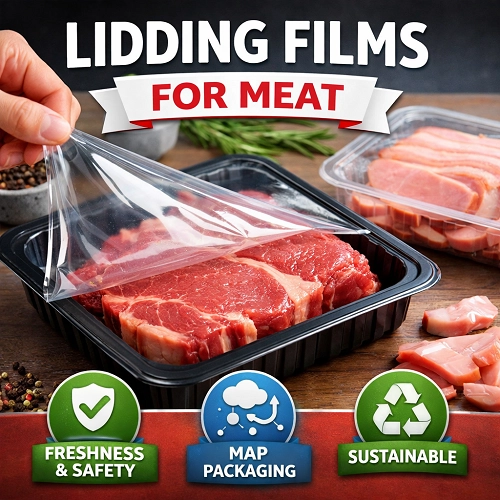

Lidding films have become a cornerstone of modern meat packaging—helping producers extend shelf life, enhance safety, improve presentation, and respond to evolving consumer and environmental demands. From fresh cuts to processed meats, these films play a vital role across the supply chain.
What Are Lidding Films?
Lidding films are thin, flexible plastic materials applied as the top closure (or “lid”) over trays, containers, or thermoformed packaging to create a sealed package. They act as both a physical and functional barrier, protecting the contents—such as fresh meat, poultry, or ready-to-eat products—from external contaminants and spoilage factors like oxygen and moisture.
These films can be heat-sealed to various tray substrates (such as PP, PET, CPET) and can come in formats that are peelable, resealable, ovenable, or tailored for use in modified atmosphere packaging (MAP).
Key Functions and Benefits
1. Shelf Life Extension and Freshness Preservation
One of the most important roles of lidding films for meat is protecting against oxygen, moisture, and contaminants, all of which contribute to spoilage. Effective barrier properties slow oxygen ingress and moisture loss, reducing oxidation and microbial growth—key to extending product shelf life and maintaining sensory quality (flavor, texture, aroma).
2. Consumer Convenience and Accessibility
Films can be designed with easy-peel or peel-and-reseal features that make it simple for consumers to open and reclose packages, keeping leftover portions fresher without transferring food to another container.
3. Tamper Evidence and Safety
Some lidding films incorporate tamper-evident designs, giving shoppers visible assurance that the packaging has not been compromised. This reinforces food safety and builds consumer trust.
4. Enhanced Retail Presentation
Clear, anti-fog films improve product visibility in refrigerated displays, helping meat look appealing and fresh—a significant factor in purchasing decisions. Films also provide a printable surface for branding, nutritional information, and marketing.
5. Sustainability and Efficient Use of Materials
Compared with rigid lids or multi-component closures, lidding films are lightweight and require less material, which reduces packaging waste, shipment weight, and environmental footprint. Many films are recyclable or available with post-consumer recycled content.
Materials and Technology Behind Lidding Films
A lidding film’s performance depends on its material composition and structure, which can be tailored to meet product needs:
- Polyethylene (PE): Common as a sealant layer with good flexibility and seal integrity.
- Polypropylene (PP): Offers high heat resistance (important for ovenable packaging).
- Polyethylene Terephthalate (PET): Excellent clarity and mechanical strength, often used for display quality.
- Multilayer Laminates (e.g., EVOH layers): Provide superior barriers to oxygen and moisture.
Films may be monolayer (single material, easier to recycle) or multilayer (multiple materials for higher performance) depending on regulatory and performance goals.
Applications in Meat Packaging
Fresh and Refrigerated Meats
Lidding films are widely used on trays of fresh beef, pork, lamb, and poultry in retail settings. They preserve color and prevent dehydration while making products more visually appealing.
Modified Atmosphere Packaging (MAP)
For meat that benefits from controlled gas mixtures to further slow spoilage, specialized lidding films compatible with MAP help maintain freshness and color stability throughout distribution.
Processed and Ready-to-Eat Meats
Sliced meats, charcuterie, and deli-style products use resealable lidding films to balance convenience with extended shelf life and presentation.
Challenges and Considerations
Barrier vs. Recyclability Trade-offs
High-performance multilayer films excel at preserving meat quality but can be harder to recycle than mono-material films. Innovation continues to balance performance with circular economy goals.
Regulatory and Food Safety Compliance
Films must meet strict food contact regulations and performance standards for barrier effectiveness, seal integrity, and material safety—especially for perishable foods like meat.
Environmental Impact
While lighter and often more material-efficient than rigid packaging, conventional plastic films still contribute to waste. This has fueled research into biodegradable or bioactive films—some of which incorporate antimicrobial or antioxidant agents to further extend shelf life while reducing environmental burden.
Future Trends in Lidding Film Technology
Active and Intelligent Packaging
Research is exploring films integrated with antimicrobial agents or smart indicators to inhibit spoilage organisms and signal freshness in real time, potentially transforming meat safety and quality control.
Sustainable Alternatives
Growing demand for biodegradable and compostable films—including those based on natural polymers—is reshaping the industry and aligning with goals to reduce plastic pollution.
Customization and Performance Innovation
Brands increasingly seek bespoke lidding solutions—such as unique peel profiles, anti-fog layers, and decorative printing—to differentiate products and enhance consumer experiences.
Lidding films are more than just a closure—they are sophisticated packaging tools that protect perishable meats, extend shelf life, improve safety, and enhance consumer convenience and brand impact. As materials science and sustainability demands continue to advance, lidding films will remain at the forefront of packaging innovation for the meat industry and beyond.