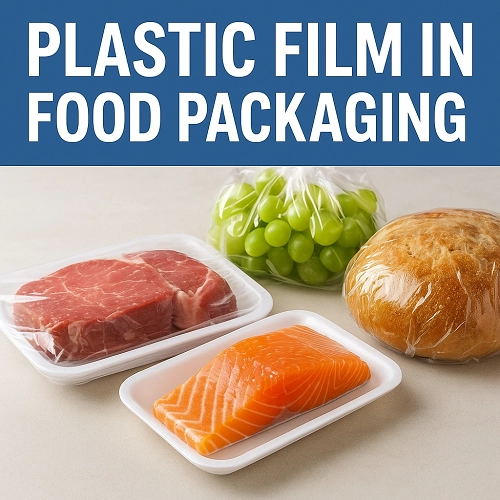

As a professional supplier of plastic film solutions, we understand that food packaging is not just about wrapping products—it is about protecting quality, extending shelf life, ensuring safety, and enhancing market appeal. Plastic film has become one of the most widely used packaging materials in the food industry due to its versatility, performance, and cost-effectiveness.
Product Functions and Uses
Plastic film plays a critical role throughout the entire food supply chain, from production and processing to transportation, storage, and retail display.
Key Functions
- Protection: Acts as a barrier against moisture, oxygen, dust, microorganisms, and physical contamination.
- Preservation: Helps maintain freshness, flavor, texture, and nutritional value by controlling gas exchange and moisture loss.
- Shelf-Life Extension: Slows oxidation and microbial growth, reducing food waste.
- Containment: Securely holds food products together, preventing leakage or spillage.
- Convenience: Enables easy handling, portioning, resealability, and visibility for consumers.
- Brand Presentation: Supports high-quality printing for branding, labeling, and regulatory information.
Common Uses
- Fresh food wrapping (meat, seafood, fruits, vegetables)
- Frozen food packaging
- Snack and bakery packaging
- Ready-to-eat and convenience foods
- Dairy and processed food sealing
- Vacuum and modified atmosphere packaging (MAP)
Product Features
Our plastic films are engineered to meet diverse food packaging requirements while complying with food safety standards.
Core Features
- Food-Grade Safety: Manufactured using approved raw materials that meet FDA, EU, and other international food contact regulations.
- High Transparency or Controlled Opacity: Allows excellent product visibility or light protection as required.
- Strong Mechanical Properties: High tensile strength, puncture resistance, and tear resistance.
- Excellent Sealability: Compatible with heat sealing, vacuum sealing, and automatic packaging lines.
- Barrier Performance: Customizable oxygen, moisture, grease, and odor barrier properties.
- Flexibility and Softness: Adapts to irregular product shapes without cracking.
- Print Compatibility: Suitable for flexographic, gravure, and digital printing.
- Environmental Options: Available in recyclable, downgauged, or eco-friendly formulations.
Product Specifications and Parameters
We offer plastic films in a wide range of materials and customizable specifications to meet different packaging needs.
Common Materials
- PE (LDPE / LLDPE / HDPE): Flexible, moisture-resistant, widely used for fresh food.
- PP (BOPP / CPP): High clarity, stiffness, and heat resistance.
- PET: Excellent strength, temperature resistance, and printability.
- PVC: Strong cling and transparency for fresh food wrapping.
- Multilayer Laminated Films: Enhanced barrier and performance through co-extrusion or lamination.
Technical Parameters (Customizable)
- Thickness: 10–200 microns
- Width: 50 mm–2000 mm
- Length: Roll or sheet format, customized per order
- Cling Level: Standard / High cling (for stretch films)
- Seal Temperature Range: 90°C–180°C (depending on material)
- Transparency (Haze): ≤2%–10%
- Tensile Strength: Up to 50 MPa
- Elongation at Break: 100%–600%
- Barrier Values: Adjustable OTR and MVTR based on food type
Product Usage Instructions
To ensure optimal performance and food safety, proper use of plastic film is essential.
Usage Guidelines
- Material Selection: Choose the appropriate film type based on food characteristics (fresh, frozen, oily, acidic).
- Surface Cleanliness: Ensure food and contact surfaces are clean and dry before packaging.
- Sealing Conditions: Set sealing temperature, pressure, and time according to film specifications.
- Storage Conditions: Store packaged food at recommended temperature and humidity levels.
- Handling: Avoid sharp edges that may puncture the film.
- Compliance: Use only certified food-grade films for direct food contact.
Special Applications
- Vacuum Packaging: Remove air completely before sealing to maximize shelf life.
- MAP Packaging: Adjust gas composition according to food respiration needs.
- Microwave or Freezer Use: Confirm film suitability before heating or freezing.
Applicable Industries
Our plastic film packaging solutions are widely used across the food sector and related industries.
Primary Industries
- Food processing and manufacturing
- Meat and seafood processing
- Fruit and vegetable packaging
- Dairy and bakery production
- Frozen and refrigerated food companies
- Snack and confectionery manufacturers
Related Industries
- Catering and food service
- Retail and supermarket chains
- Cold chain logistics
- Agricultural product distribution
- Export-oriented food packaging operations
Target Customer Groups
We serve a diverse range of customers, from large-scale manufacturers to local food businesses.
Target Customers
- Food Manufacturers: Require high-performance films for automated production lines.
- Packaging Companies: Use our films as base materials for composite or printed packaging.
- Supermarkets and Retailers: Need reliable films for in-store fresh food wrapping.
- Catering and Food Service Providers: Demand convenient, safe, and cost-effective packaging.
- Agricultural Producers: Use films for post-harvest preservation and transport.
- Distributors and Wholesalers: Supply packaging materials to regional markets.
From our perspective as a plastic film packaging provider, plastic film remains an indispensable solution for modern food packaging. Its adaptability, protective performance, and economic advantages make it suitable for nearly every category of food products. By offering customizable materials, precise specifications, and industry-compliant solutions, we help our customers improve food safety, extend shelf life, reduce waste, and enhance brand value.