

Food packaging needs to achieve more than basic sealing. For fresh food, ready meals, dairy products, seafood, and other perishable products, packaging materials must help protect product quality, maintain appearance, and support efficient production.
Lidding Barrier Shrink Film is a specialized packaging material designed for sealing trays, containers, and other food packages. By combining barrier protection, heat sealing performance, shrink capability, and visual clarity, it helps food manufacturers meet the requirements of modern packaging applications.
When selecting the right film, buyers need to consider not only the material itself but also food characteristics, packaging equipment, sealing requirements, and storage conditions.
What Is Lidding Barrier Shrink Film?
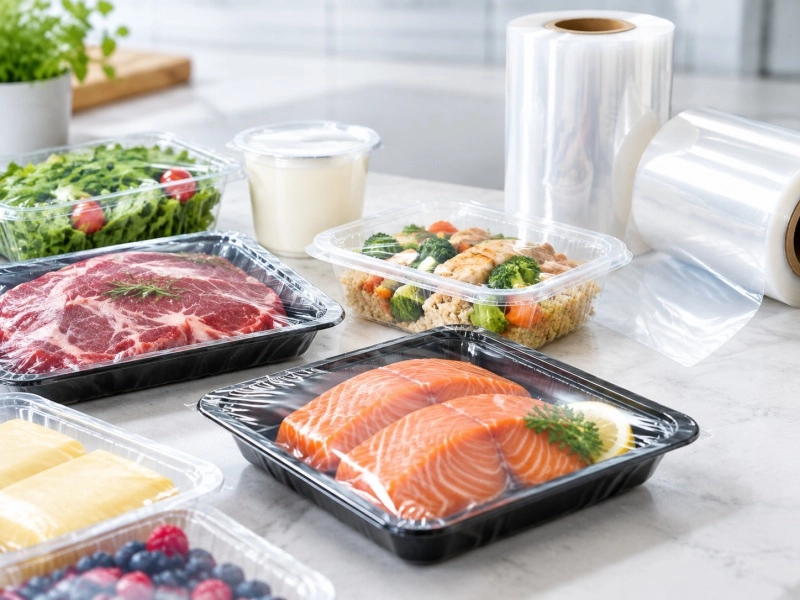
Lidding Barrier Shrink Film is a functional sealing film commonly used as the top layer of food trays and containers. Unlike conventional wrapping films, it is designed to create a reliable seal with the package surface while providing additional protection.
A high-performance lidding film structure usually combines multiple functional layers. Different layers can provide specific functions, such as:
- Barrier protection against oxygen and moisture
- Heat sealing compatibility
- Shrink performance for a tight package fit
- Transparency for product visibility
- Anti-fog performance for refrigerated displays
For food packaging applications requiring reliable sealing and barrier protection, Lidding Barrier Shrink Film can provide a suitable packaging solution.
What Key Properties Should You Consider When Choosing Lidding Barrier Shrink Film?
Selecting the right lidding film requires evaluating several technical factors. The most important properties usually include barrier performance, sealing performance, shrink behavior, and appearance.
| Key Property | Why It Matters |
|---|---|
| Oxygen Barrier | Helps protect products that are sensitive to oxidation |
| Moisture Barrier | Helps maintain product quality during storage |
| Heat Sealing Performance | Ensures reliable package closure |
| Shrink Performance | Creates a tight and attractive package appearance |
| Anti-Fog Performance | Maintains clear visibility in refrigerated conditions |
1. Barrier Performance
Barrier performance is one of the most important factors when selecting food packaging film.
Oxygen exposure can affect food quality, especially for products such as fresh meat, seafood, and other refrigerated foods. A film with suitable oxygen barrier properties can help reduce oxygen transmission and support better product protection.
Moisture control is also important. However, the required barrier performance depends on the product type, storage environment, and packaging requirements.
2. Heat Sealing Performance
A reliable seal is essential for maintaining package integrity during transportation, storage, and retail display.
When selecting Lidding Barrier Shrink Film, manufacturers should consider:
- Compatibility with tray materials
- Sealing temperature requirements
- Seal strength
- Production speed
- Packaging equipment conditions
A suitable film should provide stable sealing performance while maintaining production efficiency.
3. Shrink Performance and Package Appearance
Shrink performance influences how closely the film fits the package surface after sealing. Proper shrink behavior helps create a smooth package appearance and reduce wrinkles.
Transparency and anti-fog performance are also important for refrigerated food packaging because they improve product visibility during storage and retail display.
| Film Feature | Packaging Benefit |
|---|---|
| Shrinkability | Creates a tighter package fit |
| Transparency | Improves product visibility |
| Anti-Fog Function | Keeps the film surface clear under refrigeration |
How to Choose Lidding Barrier Shrink Film Based on Food Applications?
Different food products have different packaging requirements. The selection should be based on product characteristics, storage conditions, and expected shelf presentation.
| Food Application | Important Film Requirements |
|---|---|
| Fresh Meat | Oxygen barrier, anti-fog performance, sealing reliability |
| Seafood | Barrier protection, moisture resistance, package integrity |
| Ready Meals | Heat sealing, transparency, convenience |
| Dairy Products | Barrier performance and stable sealing |
What Factors Affect the Selection of Lidding Barrier Shrink Film?
1. Film Structure
Modern food packaging films often use multilayer structures. Different layers work together to provide balanced performance.
- Barrier layer for protection
- Seal layer for package closure
- Supporting layers for mechanical performance
The specific structure should be selected according to product requirements rather than using a standard solution for all applications.
2. Packaging Equipment Compatibility
Film selection should also consider tray materials, sealing equipment, production speed, and storage conditions. A good match between film and equipment helps improve sealing consistency and production efficiency.
Why Choose Lidding Barrier Shrink Film for Food Packaging?
With increasing demand for fresh, convenient, and visually appealing food products, packaging materials need to provide both protection and presentation value.
Lidding Barrier Shrink Film combines:
- Barrier protection
- Reliable sealing performance
- Clear product visibility
- Flexible application options
By selecting the right film structure and performance characteristics, food manufacturers can develop packaging solutions that better meet product and market requirements.
Frequently Asked Questions
What is the difference between regular lidding film and Lidding Barrier Shrink Film?
Regular lidding film mainly focuses on sealing containers, while Lidding Barrier Shrink Film combines sealing performance with additional barrier and shrink properties for applications requiring higher protection.
Is Lidding Barrier Shrink Film suitable for refrigerated food packaging?
Yes. Many refrigerated food applications require films with barrier performance, sealing reliability, transparency, and anti-fog properties.
How do I choose the right lidding film for my product?
Selection should consider food type, barrier requirements, sealing compatibility, packaging equipment, storage conditions, and desired package appearance.