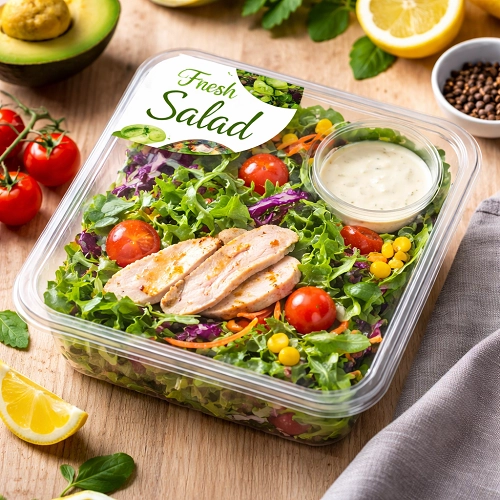

Lidding film is one of the most widely used forms of food packaging today. It plays a crucial role in protecting, preserving, and presenting food products across virtually every segment of the food industry. While often overlooked because it is thin and flexible, lidding film incorporates highly engineered materials and technologies designed to meet strict performance, safety, and regulatory requirements.
What Is Lidding Film?
Lidding film refers to thin plastic or laminate films used to seal the top opening of a food container—such as trays, tubs, bowls, cups, and trays—to create a complete package. It serves as the seal or cover, which may be peelable, tear‑resistant, recloseable, breathable, or hermetically sealed depending on the application.
Unlike rigid lids made of plastic or metal, lidding film is flexible and typically heat‑sealed to a tray or container made from materials like PET, PP, PS, or paperboard.
Core Functions of Lidding Film
Lidding film is engineered to perform multiple functions:
1. Barrier Protection
The film acts as a barrier to oxygen, moisture, light, aroma, and microbes—critical in extending product shelf life. Barrier performance varies based on material and layer structure.
- Oxygen barrier: Slows oxidation and spoilage
- Moisture barrier: Maintains food texture and prevents dehydration
- Aroma/Flavor barrier: Keeps volatile flavors intact
- UV/light barrier: Protects light‑sensitive products
High‑barrier films often include materials like EVOH (ethylene vinyl alcohol) or nylon.
2. Tamper Evidence & Safety
Many lidding films incorporate tamper‑evident features such as:
- Destructuring on removal
- Security seals
These give consumers confidence that products have not been opened or contaminated.
3. Convenience for Consumers
Modern lidding films can be engineered to:
- Peel easily without residue
- Reseal for multiple uses
- Be microwave‑safe or ovenable
Features like easy‑peel and reclosures enhance convenience and reduce food waste.
4. Branding and Information Display
Lidding films often carry:
- Product branding and color graphics
- Nutritional information
- Barcodes and QR codes
High‑quality printing technologies allow sharp, vibrant images and text.
Materials and Structures
Lidding films rarely consist of a single material. Instead, they are multilayer laminates tailored to the requirements of the application.
Common Material Types
| Material | Function |
| PET (Polyethylene Terephthalate) | High temperature resistance; printing surface |
| PP (Polypropylene) | Good heat seal properties; microwaveable |
| PE (Polyethylene) | Excellent moisture barrier |
| EVOH (Ethylene Vinyl Alcohol) | High oxygen barrier |
| Nylon (PA) | Mechanical strength and puncture resistance |
| Metallized layers | Light and oxygen barrier enhancement |
A lidding film structure may look like this (outer to inner):
PET (printable) / Adhesive / EVOH / Adhesive / PE (sealant)
Each layer contributes specific properties such as barrier resistance, sealability, strength, or printability.
Manufacturing Processes
1. Film Extrusion
Multiple polymer melts are extruded and combined through co‑extrusion into a multi‑layer film.
2. Lamination
Separate layers may be laminated using adhesives or solventless techniques to achieve desired attributes.
3. Corona or Plasma Treatment
Surface treatments are applied to improve ink adhesion and sealability.
4. Printing
Flexographic or gravure printing applies branding and product information.
5. Slitting and Rewinding
Wide rolls are slit to size for use on packaging machines.
Types of Lidding Film by Packaging Function
Peelable Lidding Film
Designed to peel off easily without tearing or leaving residue—common for fresh produce, deli trays, and yogurt cups.
Peel‑and‑Reseal Film
Has a low‑tack pressure‑sensitive adhesive to allow repeated opening and closing.
Hermetic Seal Film
Used for vacuum‑packed or modified‑atmosphere packaged (MAP) products—provides an airtight seal.
Breathable Film
Allows controlled gas exchange—useful for fresh produce to manage humidity and delay spoilage.
Microwave/Ovenable Films
Specifically engineered to withstand high temperatures and pressure changes during heating.
Packaging Applications
Lidding film is used across a wide range of food products:
- Fresh produce trays (berries, salad)
- Ready‑to‑eat meals
- Deli meats and cheeses
- Dairy products (yogurt, sour cream)
- Frozen foods
- Bakery items
- Snacks and confectioneries
Each application has unique demands for barrier properties, clarity, heat resistance, and seal strength.
Performance Characteristics
Seal Strength
Measured in peel force (g/in or N), adequate seal strength prevents leaks but should still allow easy opening.
Clarity and Gloss
Important for product visibility and consumer appeal.
Puncture and Tear Resistance
Especially crucial in frozen and heavy food packaging.
Heat Seal Range
Defines optimum conditions (temperature, time, pressure) for achieving strong, consistent seals on a given container.
Regulatory and Safety Considerations
Food contact lidding films must comply with regional regulations, including:
- FDA (U.S.) Food Contact Substance (FCS) approvals
- EU Framework Regulation (EU) No. 1935/2004
- Migration limits for specific monomers and additives
- Good Manufacturing Practices (GMP)
Manufacturers perform overall and specific migration testing to ensure safety.
Sustainability and Recycling
Sustainability is a growing focus in food packaging, including lidding films.
Recyclability Challenges
Multilayer films provide high performance but are difficult to recycle due to mixed polymers. Solutions include:
- Monomaterial films (e.g., all‑PP structures)
- Recyclable sealant layers
- Chemical recycling technologies
Compostable/Biodegradable Films
Some applications use certified biodegradable films (e.g., PLA‑based), though performance and cost tradeoffs exist.
Lightweighting
Reducing film thickness while maintaining performance lowers material use and carbon footprint.
Industry Trends and Innovations
Smart & Active Packaging
Embedding technologies such as:
- Oxygen scavengers
- Time‑temperature indicators
- QR codes for traceability
Improved Barrier Structures
Advanced polymers and nano‑barrier coatings to extend shelf life while minimizing material.
Digital Printing for Personalization
Short‑run, variable printing enables customization and seasonal promotions.
Recycling‑Friendly Designs
Designing for sorting streams and mono‑material compatibility.
Choosing the Right Lidding Film
When specifying lidding film, food manufacturers consider:
- Product type and shelf life
- Required barrier properties
- Container material and shape
- Processing conditions (e.g., MAP, retort, freeze/thaw)
- Consumer convenience needs
- Sustainability goals
- Cost constraints
Lidding film is a vital yet often invisible component of food packaging. Its engineered multilayer structures balance barrier performance, sealability, mechanical strength, processability, consumer convenience, regulatory compliance, and sustainability. As consumer expectations and environmental standards continue to evolve, lidding film technology will keep advancing—offering smarter, greener, and higher‑performing solutions for the food industry.